Reimagining a core enterprise workflow
Overview
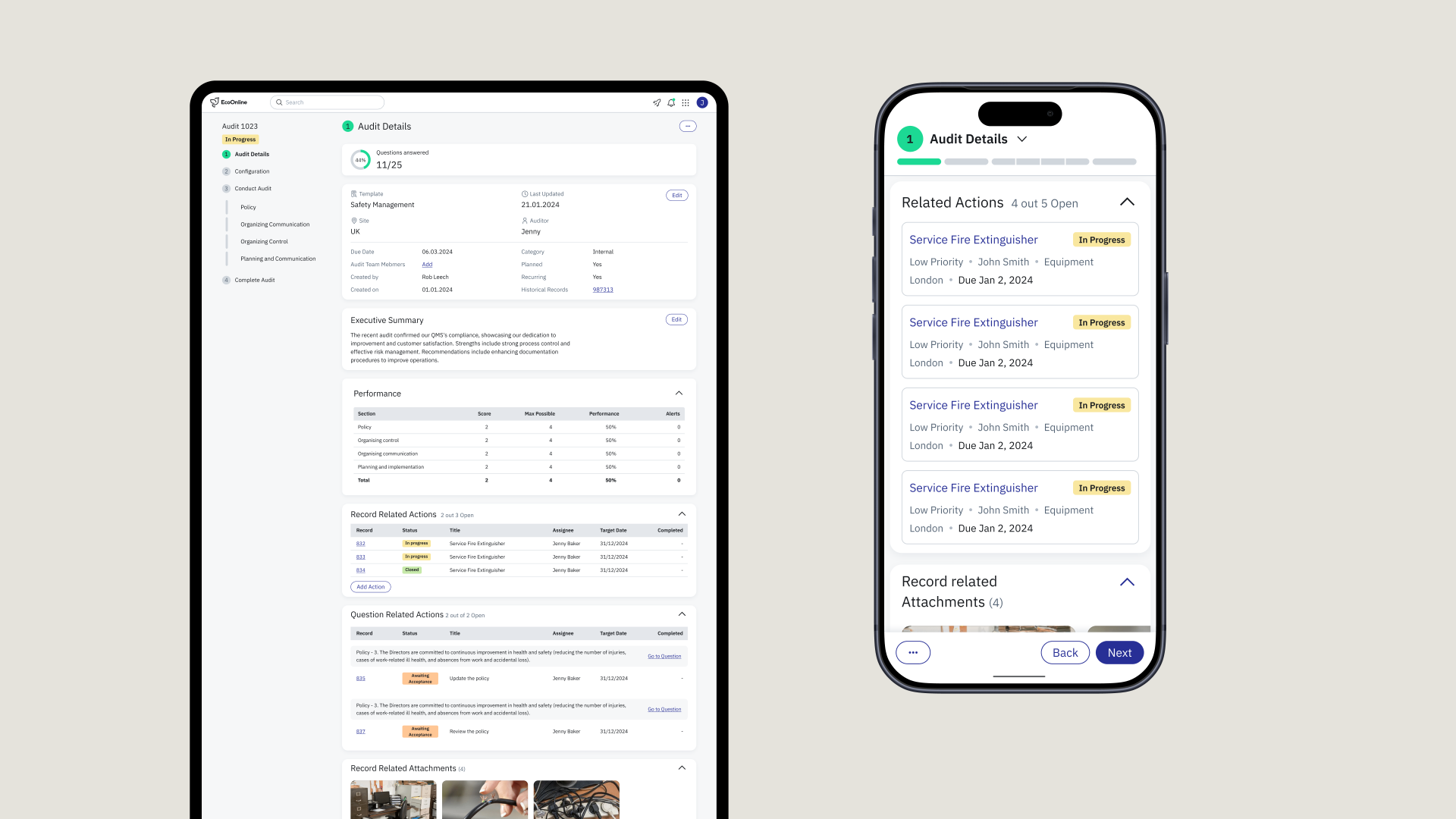
Audits and inspections are at the heart of health, safety, and compliance work. For frontline workers across construction, factories, and industrial environments, auditing and inspections are everyday tools, and they need to be quick and easy to use.
EcoEHS Audit is one of EcoOnline's most heavily used modules. It was also one of the most outdated. Built up over many years, the experience had become hard to use and time-consuming.
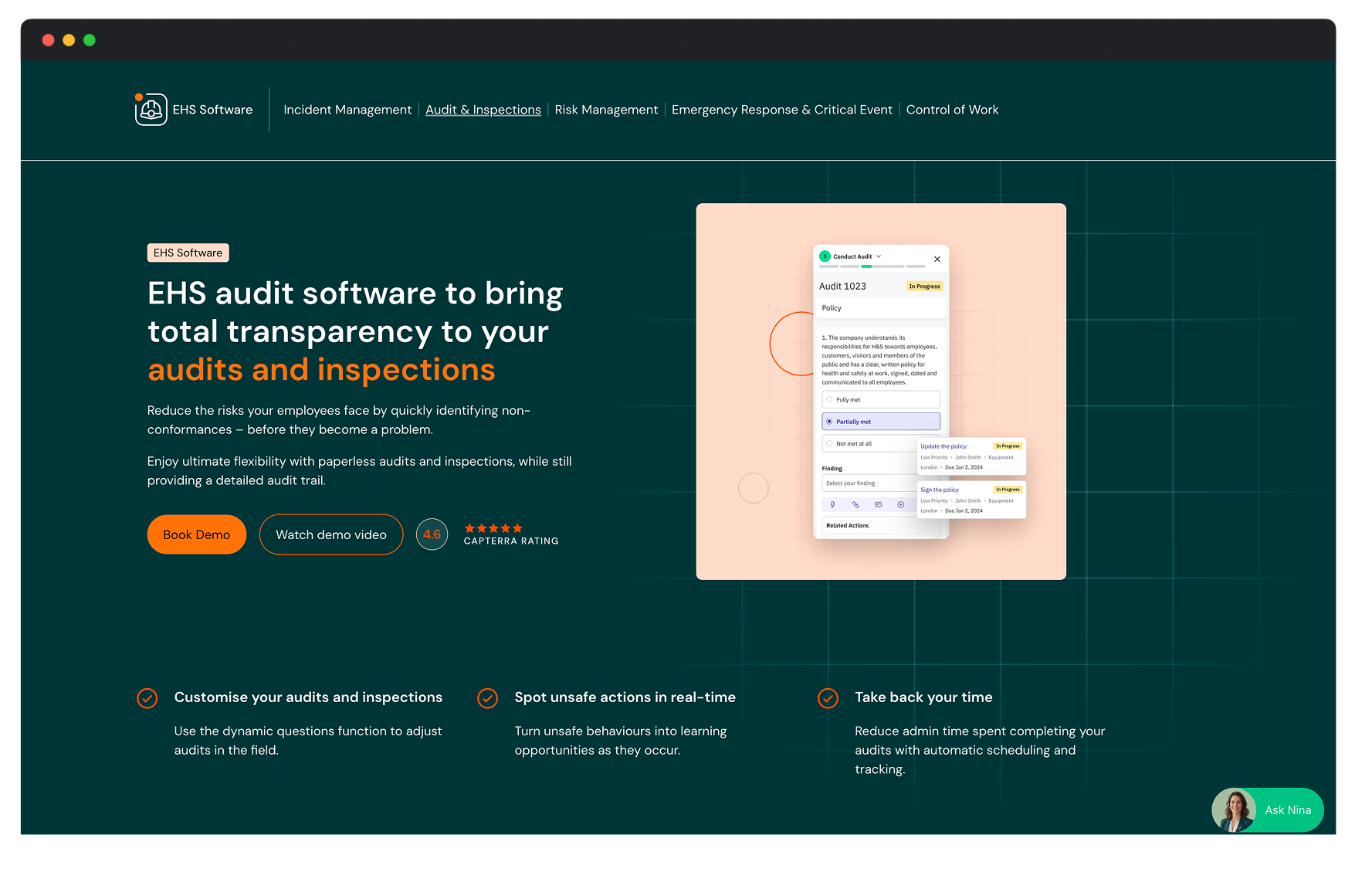
The redesign transformed how audits and inspections worked, creating a simpler experience for users and introducing patterns that later influenced the wider portfolio. The new design became a sales driver, with customers seeing the value and winning us deals over competitors. Most importantly, it removed friction for the people relying on it every day.
The Challenge
The existing experience had accumulated years of complexity. Workflows required too many steps, UX patterns were inconsistent across pages and the mobile usability was poor. The cognitive load was high, especially for users working quickly in the field.
Since the module was in high usage every day, moderinsising it aggressively risked disrupting the workflows and eroding trust. This required bringing customers and users with us throughout the redesign.
Approach
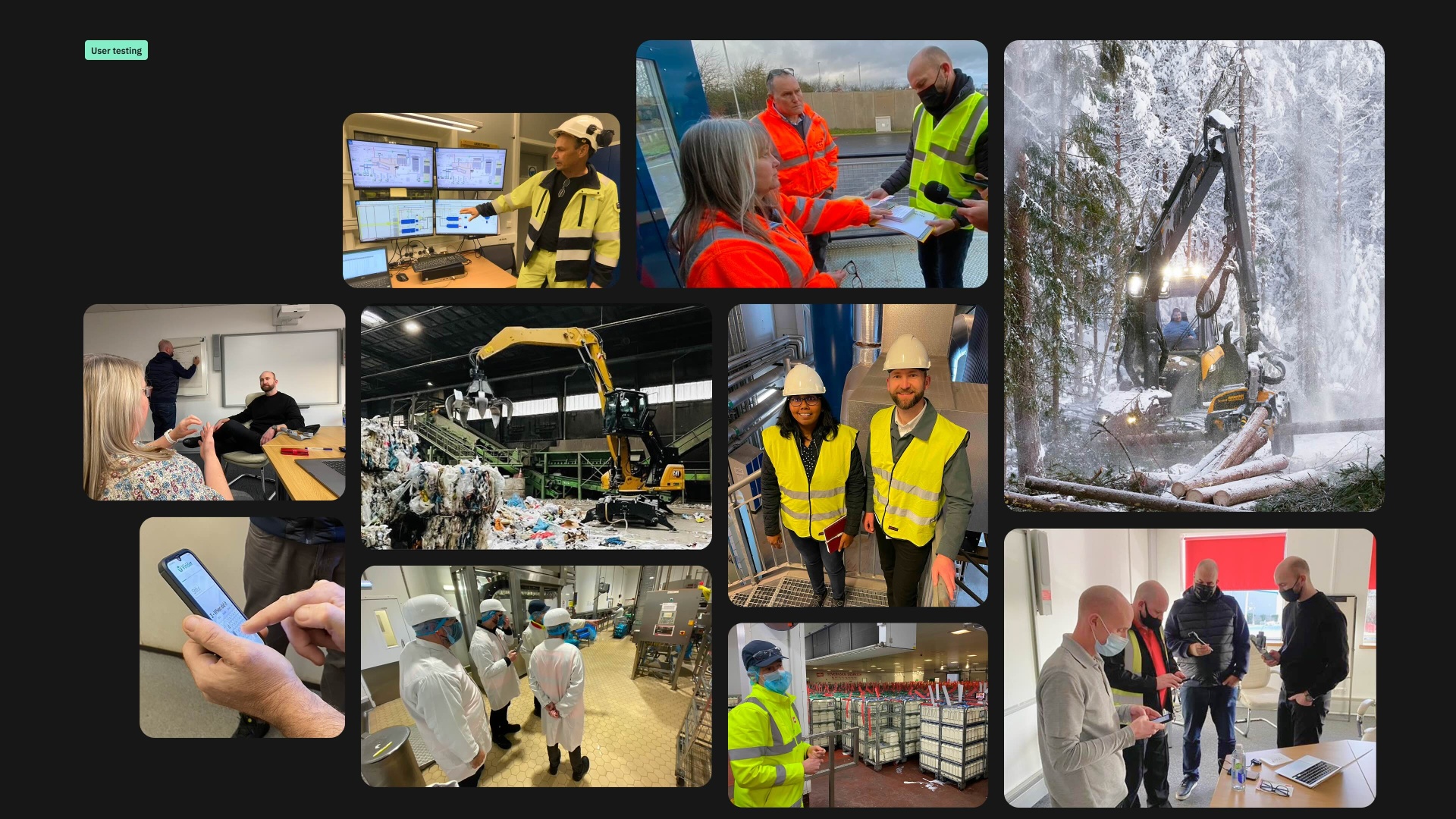
We spent time with the people who actually used it, travelling to remote locations in the UK, Finland and Norway. Watching frontline workers carry out inspections quickly changed our assumptions about what mattered.
One example came from testing with forestry workers in Finland. They were wearing insulated gloves with conductive fingertips, but many of our controls were still too small to use reliably. Increasing tap targets solved that problem, while making the experience easier for everyone else too.
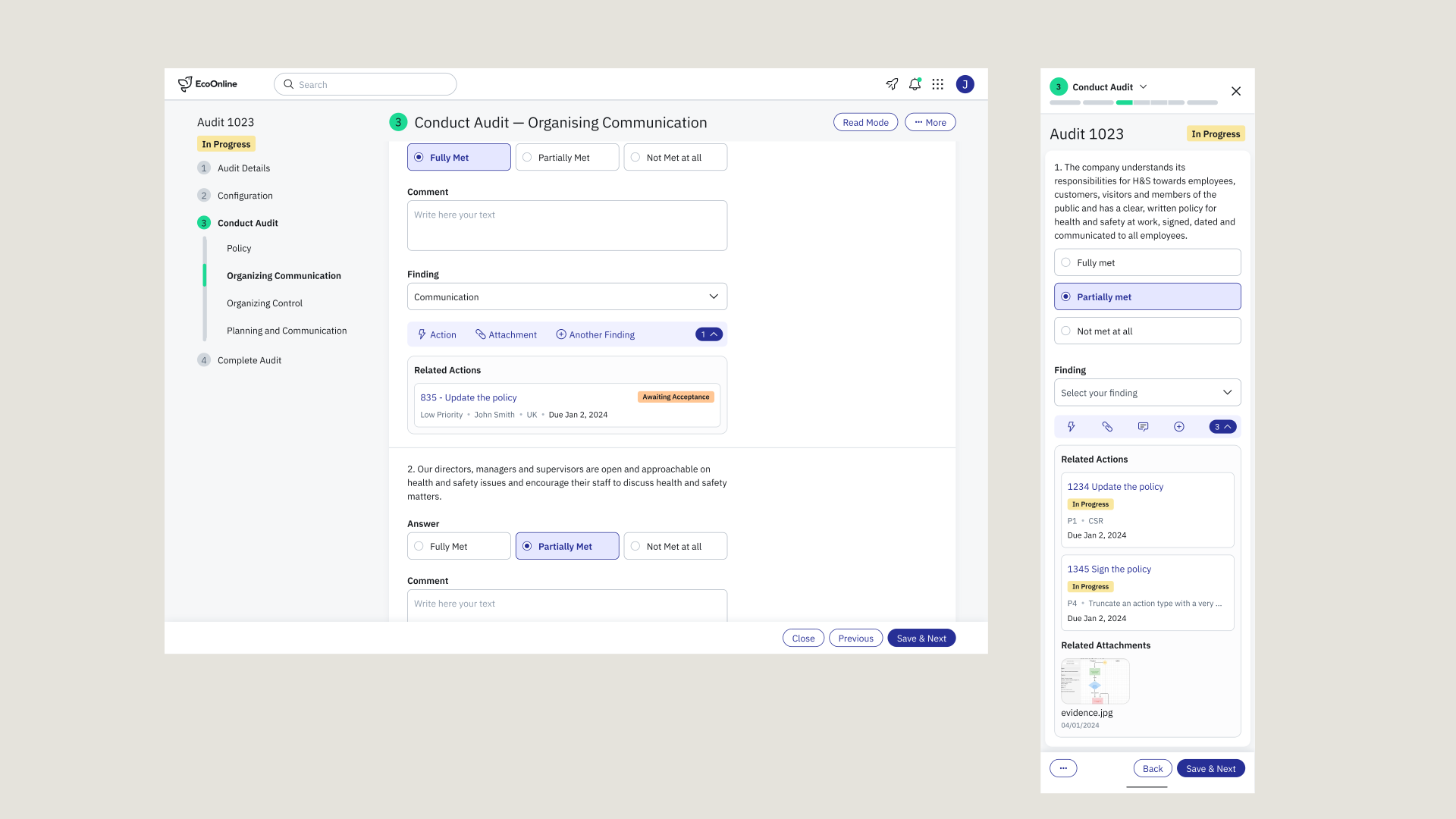
We also avoided inventing new interactions where familiar ones already existed. Image capture was redesigned to behave like the camera flows people already knew from everyday apps like Instagram and TikTok. Another insight was around writing. Many users kept notes short, not because they had little to say, but because typing on a phone in difficult conditions was slow and frustrating. Introducing voice-to-text changed that. People documented issues in more detail, producing richer audit reports with less effort.
None of these decisions came from UX best practices alone. They came from observing people doing demanding work in real environments, then removing as much friction as possible.
Outcome
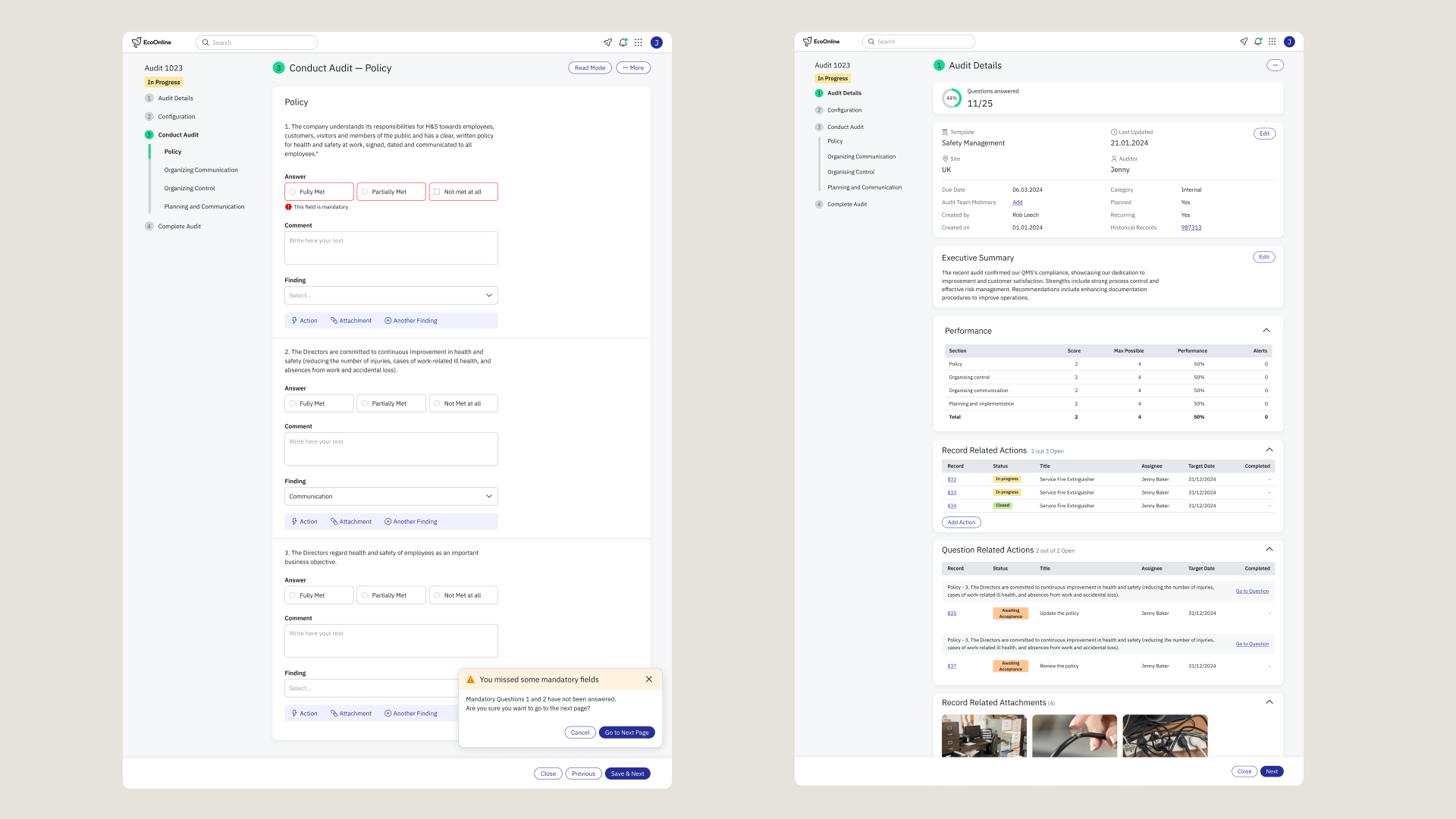
The redesign became one of our best sales demos. Sales teams regularly used it in customer meetings because it clearly showcased a faster, more modern experience than competitors. It helped win new business and reinforced the company's investment in UX.
The project also set direction for the rest of the platform. The patterns introduced here, including step-based workflows, page density, image capture, voice input, task assignment, and file handling, were reused across multiple products and became part of the foundation of our Prism design system.
For me, that's the measure of a successful redesign. It solved the immediate problem, improved customers day to day work, and created patterns that continued to pay off across the wider product portfolio.
Reflection
The project reinforced something I've seen throughout my career. The best design decisions rarely come from debating solutions. They come from understanding what users are actually trying to do.
Meeting users in their own environment can replace hours of discussion. Seeing their challenges firsthand reveals things that would be difficult to uncover in meetings and workshops.
It sounds simple, but it's easy to lose sight of. The closer you get to the people using your product, the better decisions you make.