Building the operating system for a multi-product SaaS platform
Overview
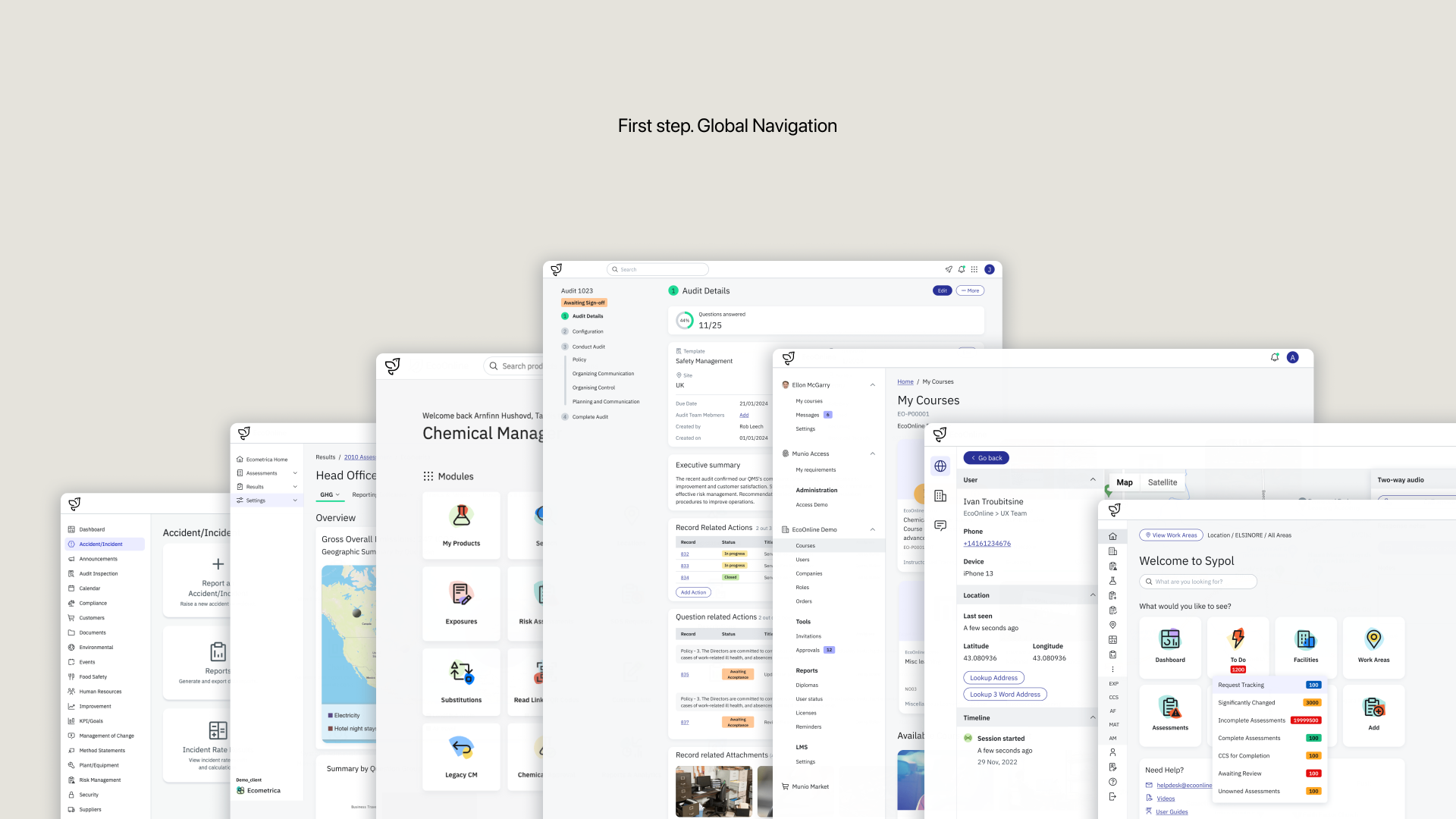
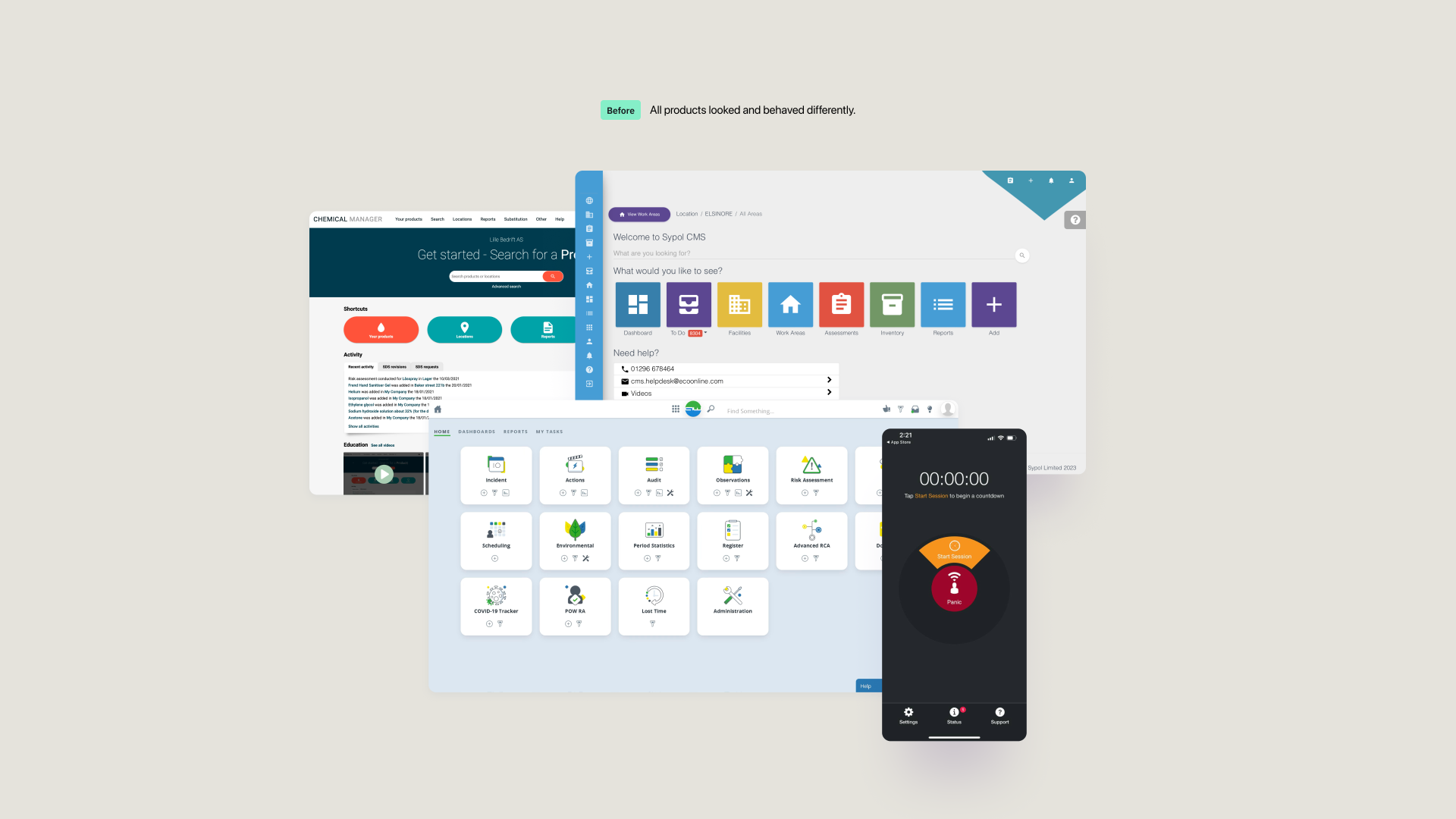
When I joined EcoOnline, the company had grown rapidly through acquisition. Eight products had been built by different teams, at different times and with different ideas about UX. Although they served many of the same customers, they felt like separate applications rather than parts of one platform.
Customers had to relearn navigation and workflows as they moved between products, engineering teams repeatedly solved the same UX problems, and Sales struggled to present EcoOnline as a unified platform.
My role was to create a shared foundation that every product team could build on. That initiative became Prism.
Approach
Redesigning eight products wasn't realistic, so we focused on the experiences customers encountered across the portfolio.
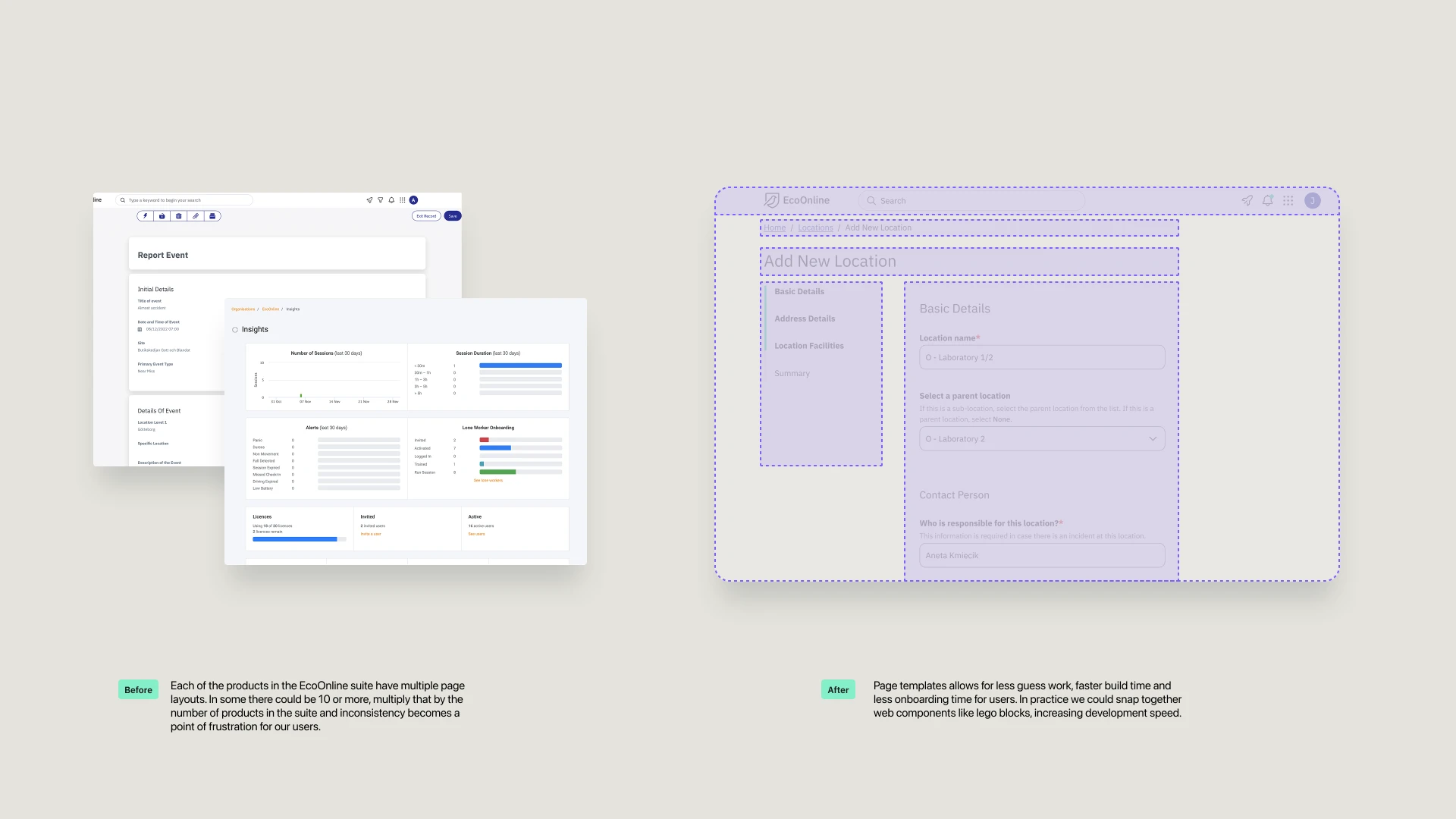
We introduced a shared global navigation before defining common patterns for page layouts, document management, task handling, notifications and mobile behaviour. Those decisions became the foundation of Prism, giving every team a common language for designing and building products while allowing each product to evolve independently.
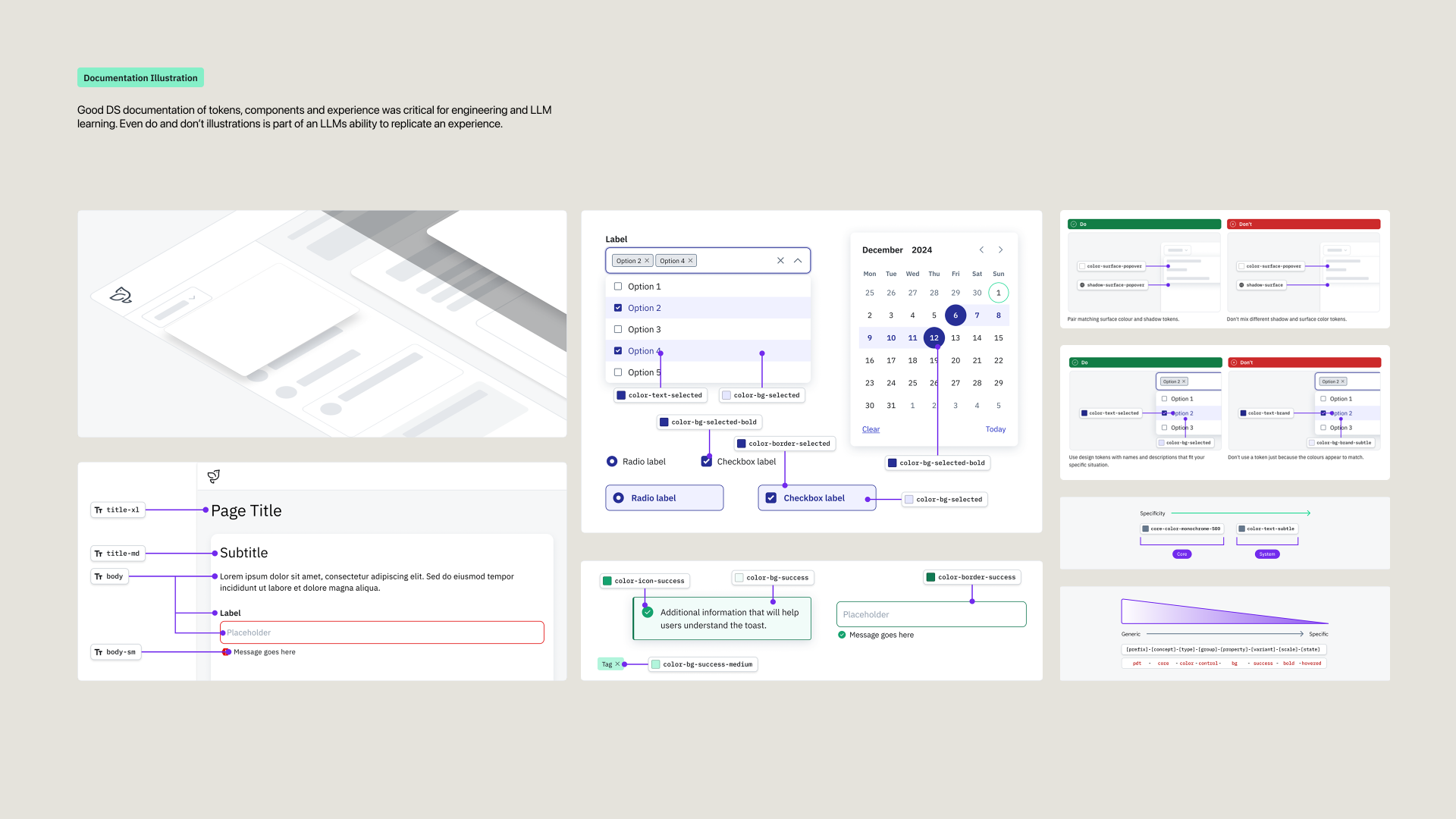
As the work matured, we extended Prism beyond a traditional design system. We documented not only components and tokens, but also interaction patterns and behavioural rules, then connected Claude Code directly to Figma through MCP. Engineers and product managers could generate prototypes using the latest components, tokens and experience patterns from their very first prompt.
Instead of relying on people to remember the design system, the design system became part of the development workflow.
Outcome
Prism became one of the foundations of EcoOnline's platform strategy, bringing consistency across more than eight products while giving engineering a single source of truth for building new experiences.
Customers encountered familiar interactions as they adopted additional products, engineering teams stopped recreating common UX solutions, and AI-assisted development produced prototypes that already aligned with the company's design principles.
As more of the foundational work became embedded in the system, designers spent less time reviewing UI consistency and more time understanding users, shaping product direction and exploring new opportunities.
Reflection
The biggest lesson from Prism was that the cost of fragmentation is not only inconsistency. It is the amount of decision-making that gets repeated across an organisation.
When eight teams solve the same problems independently, the company spends energy debating patterns instead of improving experiences. Customers feel the result through inconsistent products, while teams lose time rebuilding solutions that already exist.
A successful design system reduces that decision debt. It captures the knowledge of the organisation and makes it available to everyone building products.
The next evolution is making that knowledge accessible to AI. When design principles, components and patterns are available directly in the tools people use to create, the system becomes a multiplier for the entire organisation.